
Welcome to the Wild Bee Honey Farm Blog! A Trip to Wyoming with the Bees.
The Long Road to Wyoming – 2026 Edition
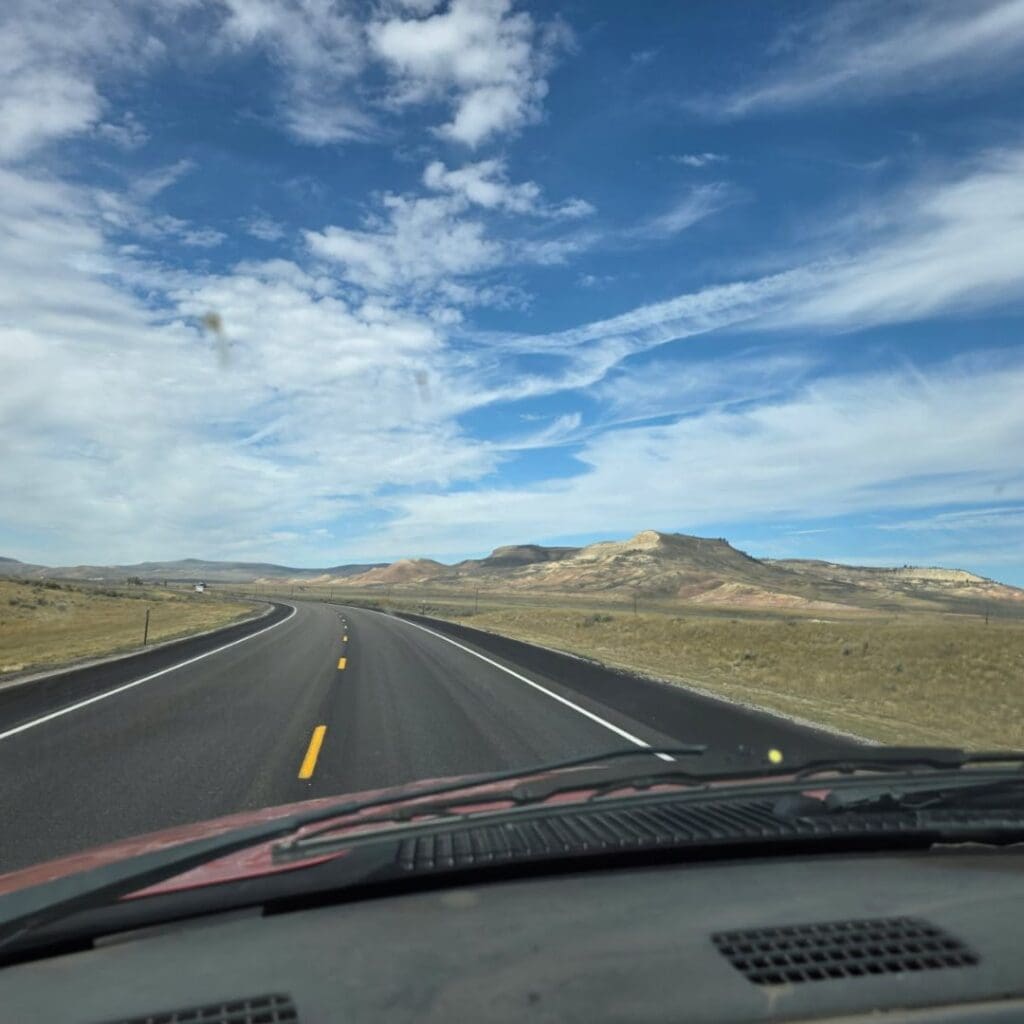
It’s the time of year for me (Mike) to go to Wyoming and help my beekeeping partner get the honey off and get the bees ready for winter. It’s 1000 miles and a 2 day drive for me. Not exactly my idea of the best time, but I found out a very long time ago that commercial beekeeping is mostly driving.
When I leave Southern Oregon I drive for about 10 hours to get to Twin Falls, Idaho. There is a lovely gorge to drive over. On the second day I drive from Twin Falls to my destination: the very small town of Farson, Wyoming, which is just north of Rock Springs. There are many ways to get there but I go through Pocatello, Idaho; I think it’s a much prettier and more enjoyable than going through Utah (Sorry, Utahns!).
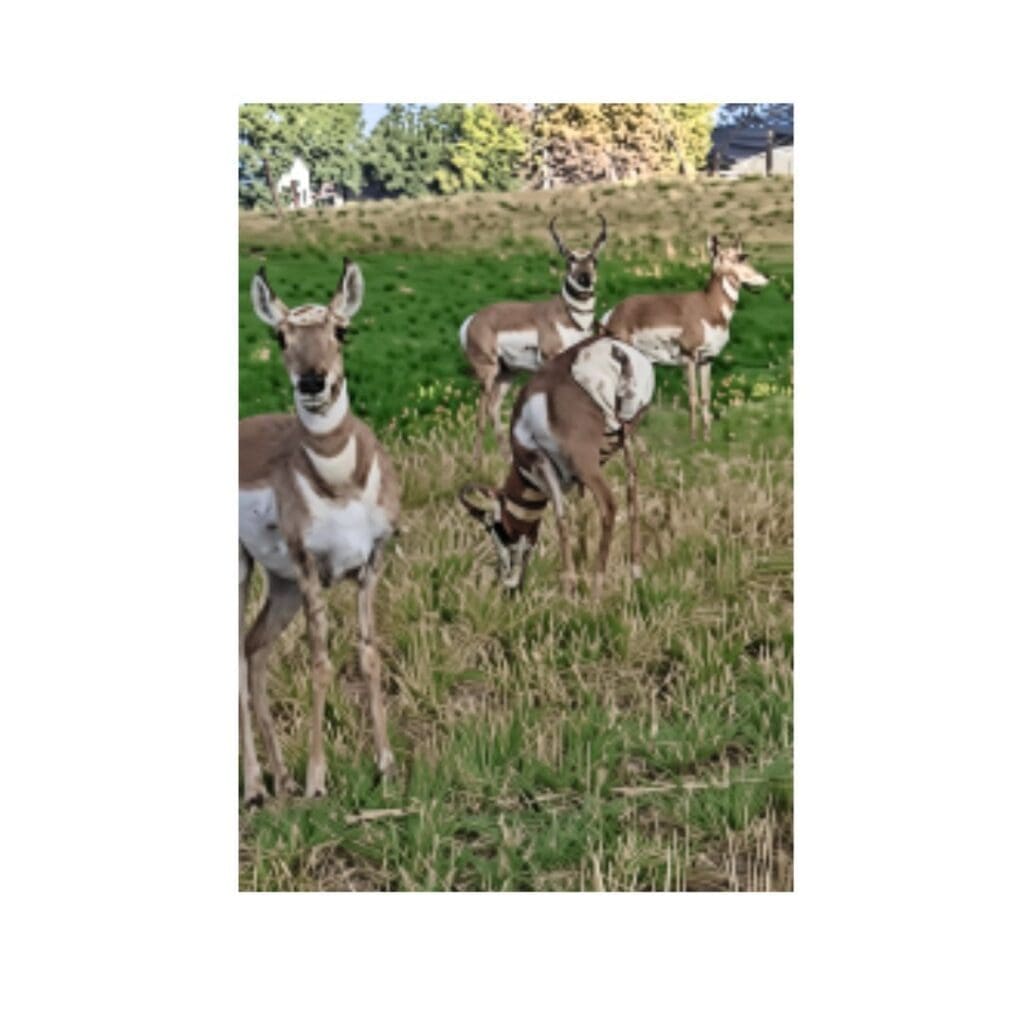
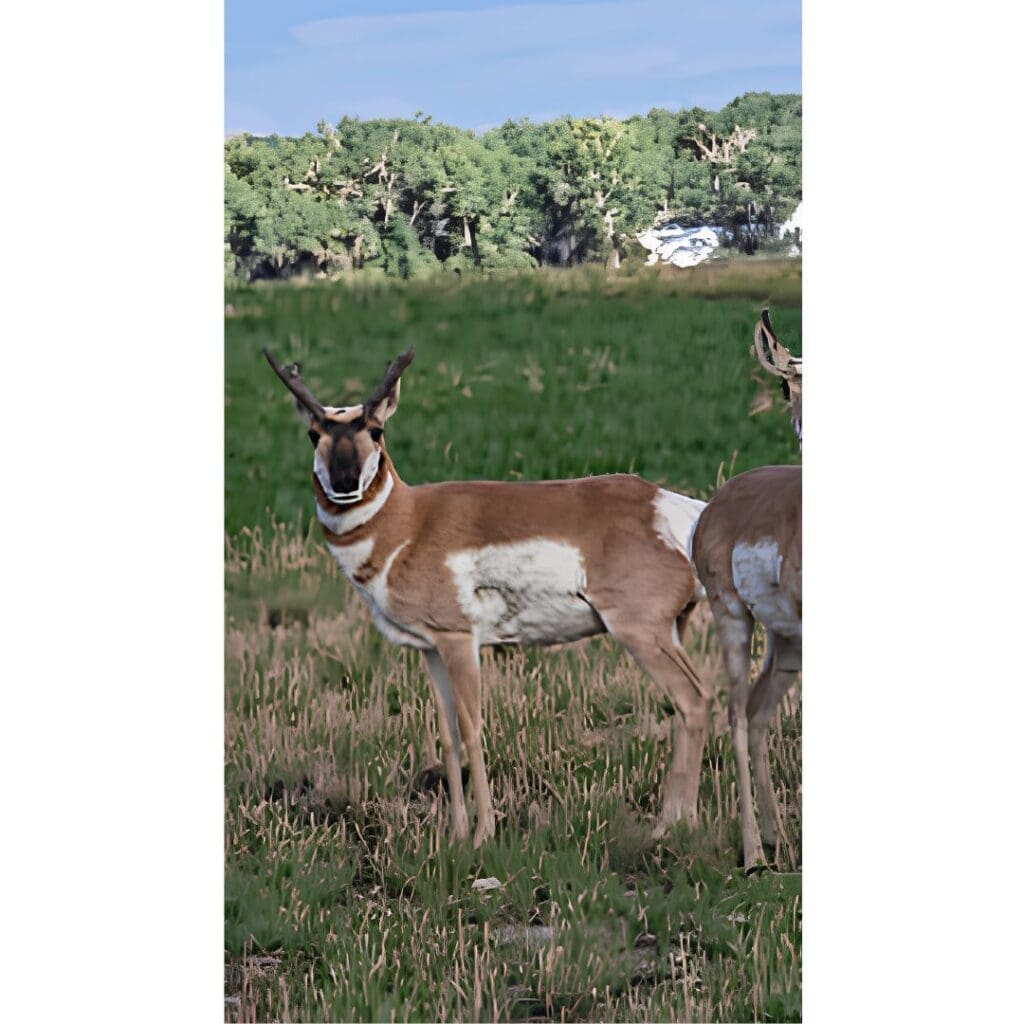
Once I get to Wyoming I start to see lots of antelope by the side of the road and there are always lots of antelope at the ranches where I keep the bees.
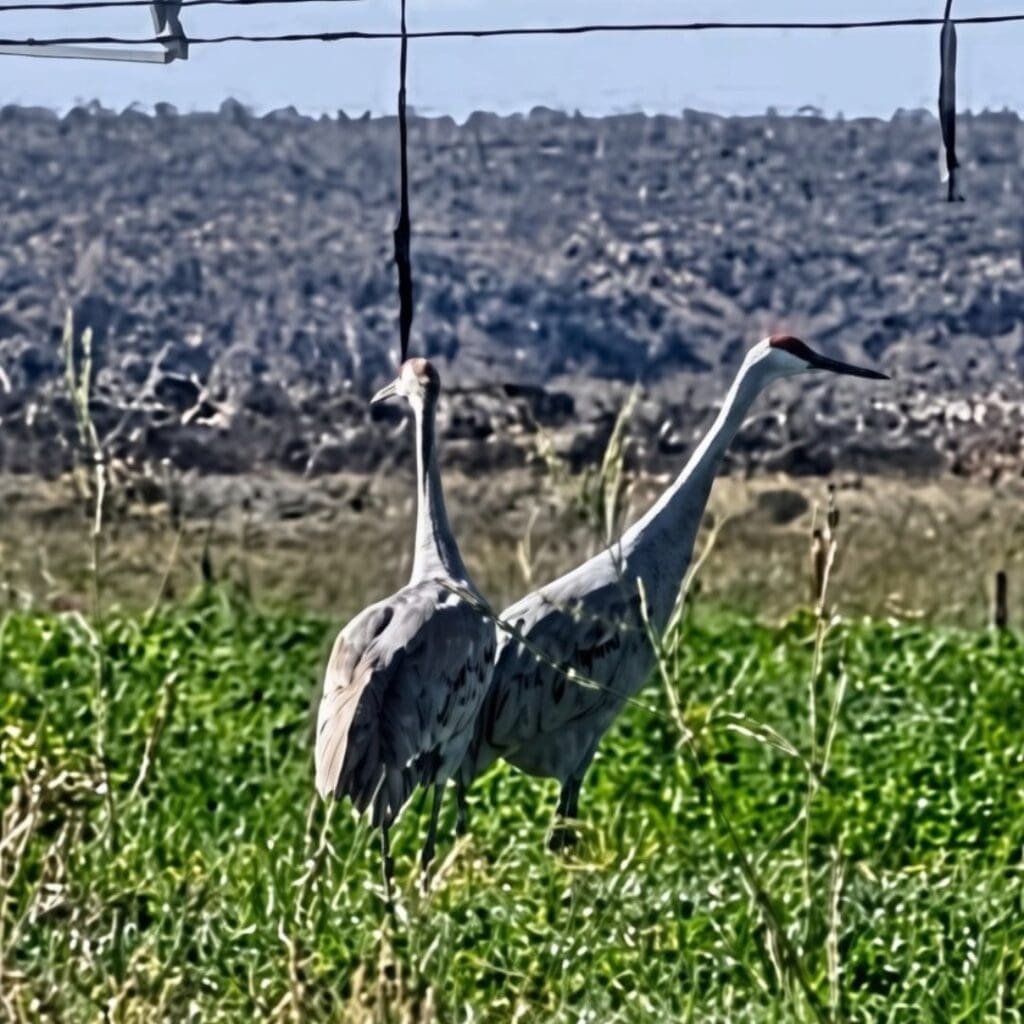
There are also lots of Sandhill cranes. There are hundreds of them in the different fields; they make quite the noise throughout the day and evening .
 There are also wild horses. I don’t always get to see them but this trip I’ve seen two different herds of them. That was a treat.
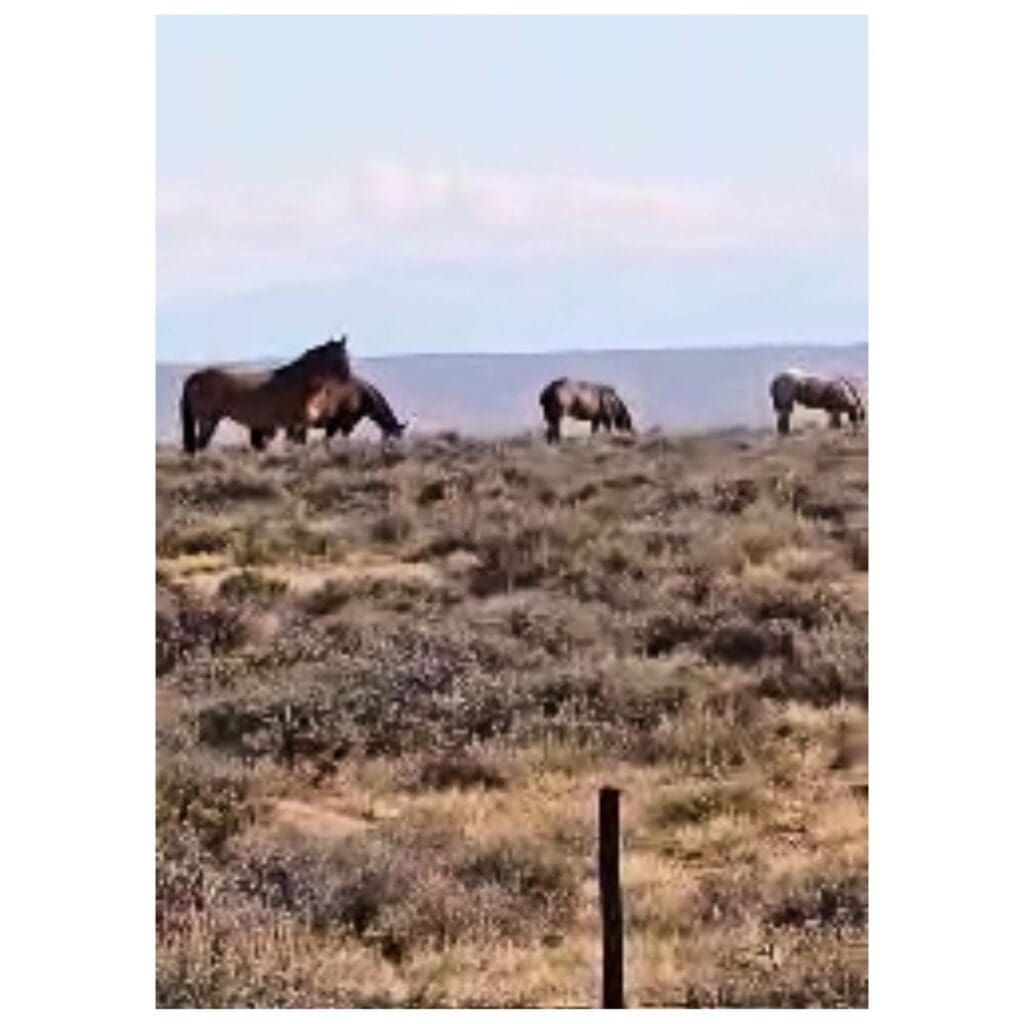
(I apologize for the grainy wildlife photos; many were taken while driving or were zoomed in too much. I’m learning to be a better photographer!)
So, in Wyoming, since I can only be there a few days, it’s long days of work… Bee work waits for no one, just like any other type of farming, it’s all season-dependent.
We get up at 7 and by 7:30 we are up and at ‘em, getting ready to pull honey off and set up the hives for the following day. To remove the honey, we put bee escapes on underneath the honey boxes (supers) we’re going to take off. To do this, we will lift up one or two supers and insert the bee escape between the boxes. The bee escape is a flat board with a “puzzle” in the middle of it so that bees are able to leave, but not re-enter. We come back the following morning. The bees during the night will have gone down below and out of the honey supers and so we can pull the supers off without having hardly any bees on them. That way we avoid using noxious chemicals to drive the bees out of the hive.
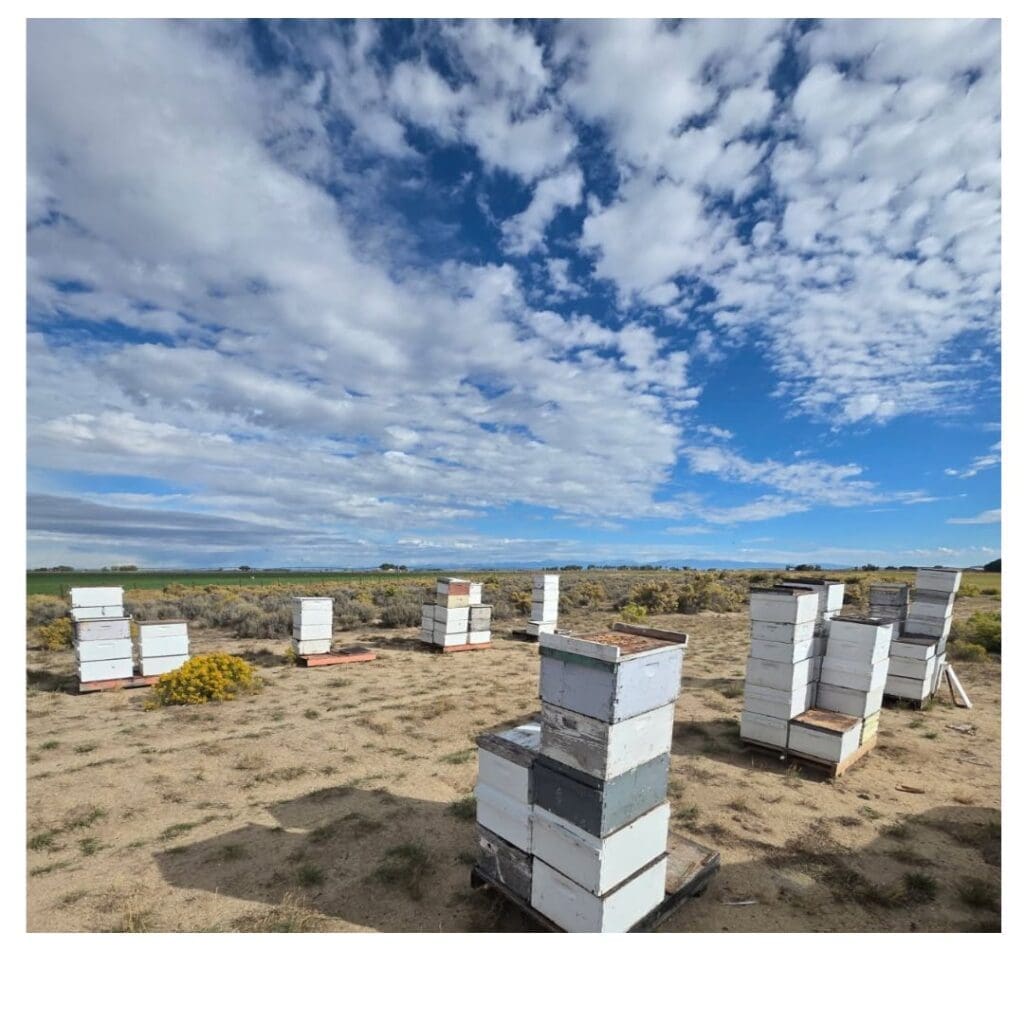 One of many bee yards in the backcountry of southwestern Wyoming.
After having done that, we drop off the frames of honey we pulled at the honey house (honey extracting plant) and go right back out and put the escapes on the hives for the following day… and then we go back to the honey house… and we extract honey till 5:00 or 7:00 in the evening. And repeat the following day, and the following… You get the idea.
This is our extracting equipment that we use in Wyoming . It works pretty well most of the time. The first step is uncapping the frames, to get at the honey inside each cell.
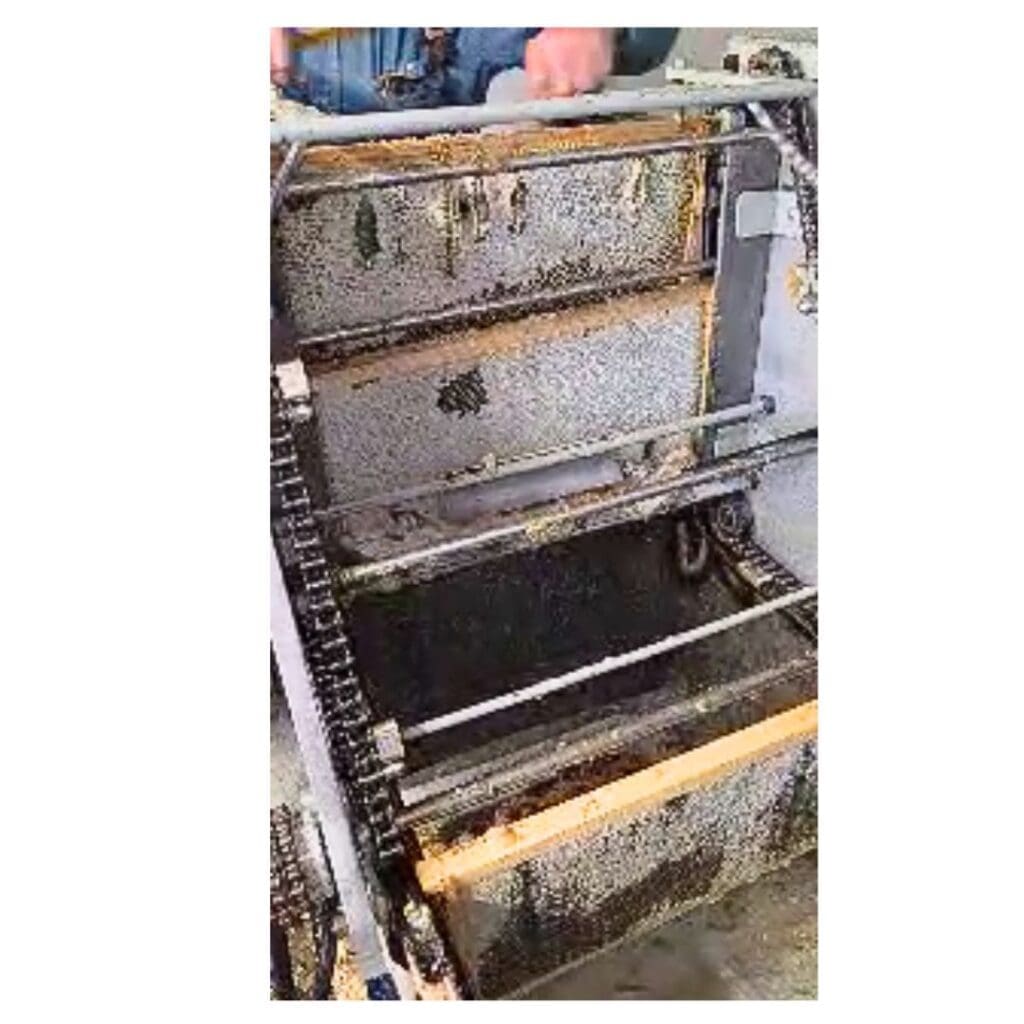
We set a frame onto a chain conveyor belt they are then dropped down into a double set of hot knives which take the cappings off the comb, then it drops down onto another chain conveyor and pushes it out onto a trough and then we pick those frames up and put them into the stainless steel racks.
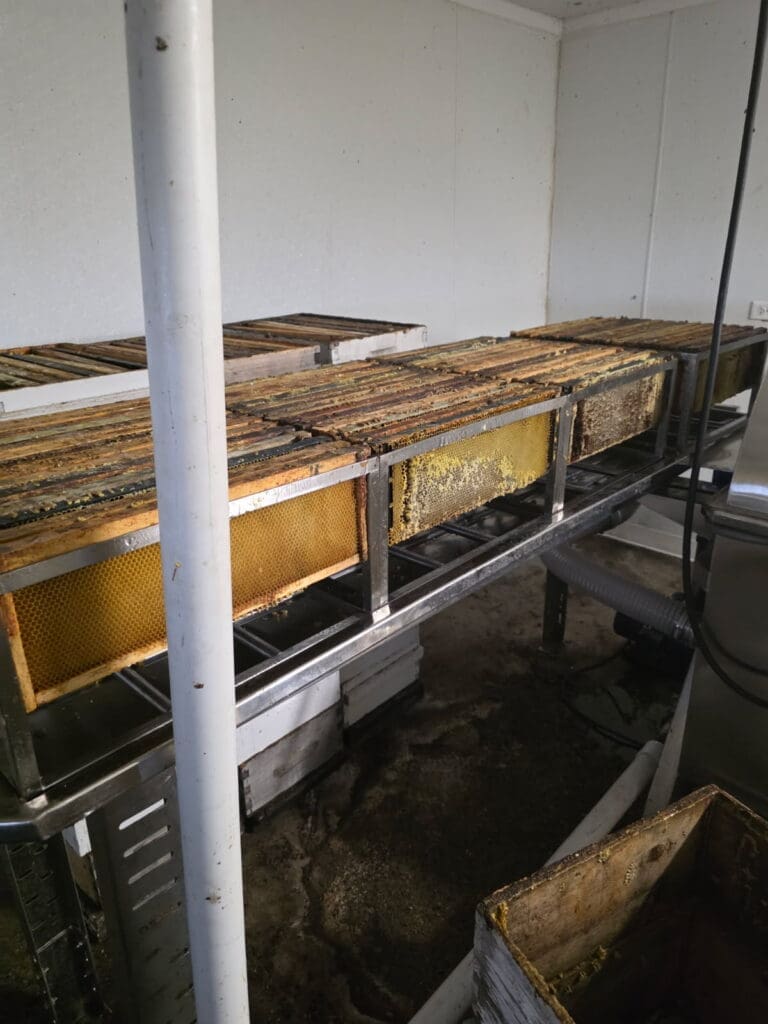
Once the racks are full we slide them into the extractor, which is a centrifuge which spins and whips the honey out of the comb. This type of extractor is called a barrel extractor. It’s actually easier on the frames and we have less damage to them. We want to preserve them as much as possible, because we will put these frames back on the bees, which saves them the work of having to draw out the comb all over again.
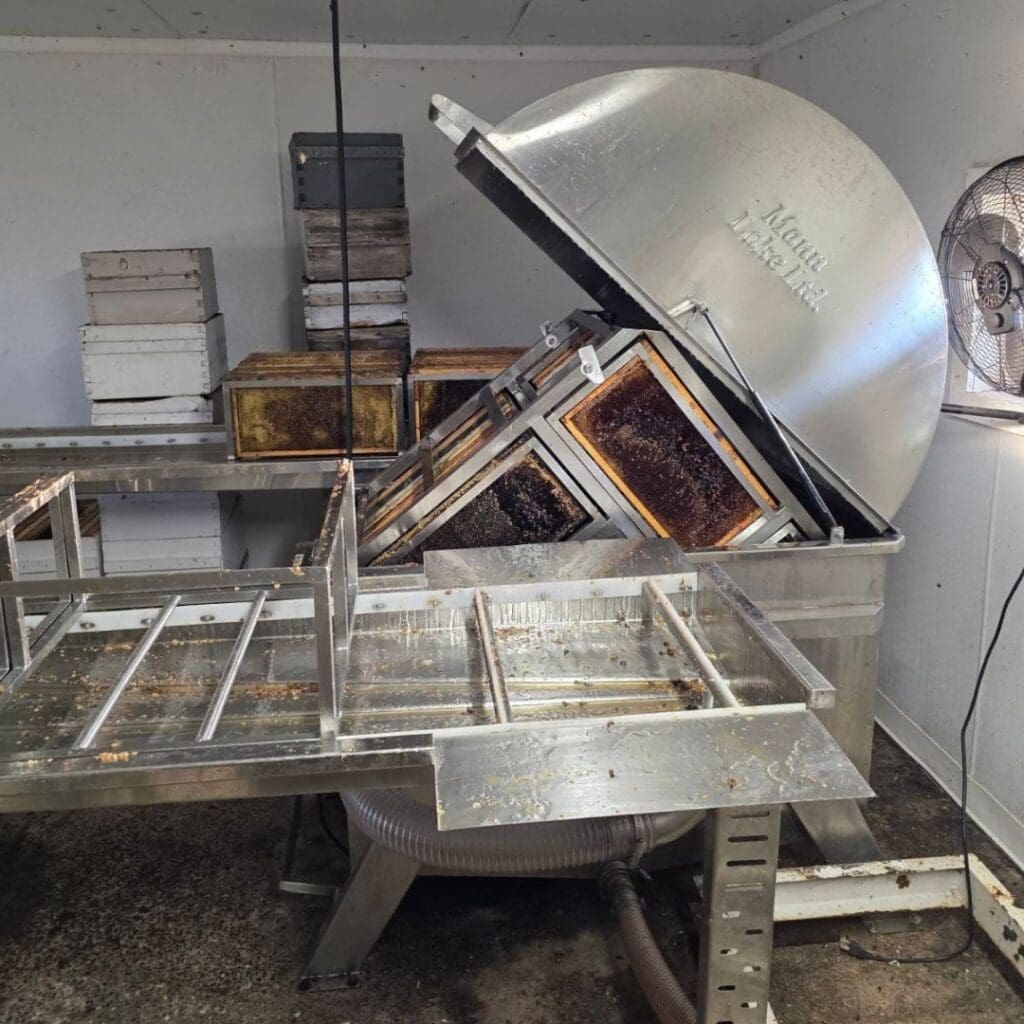
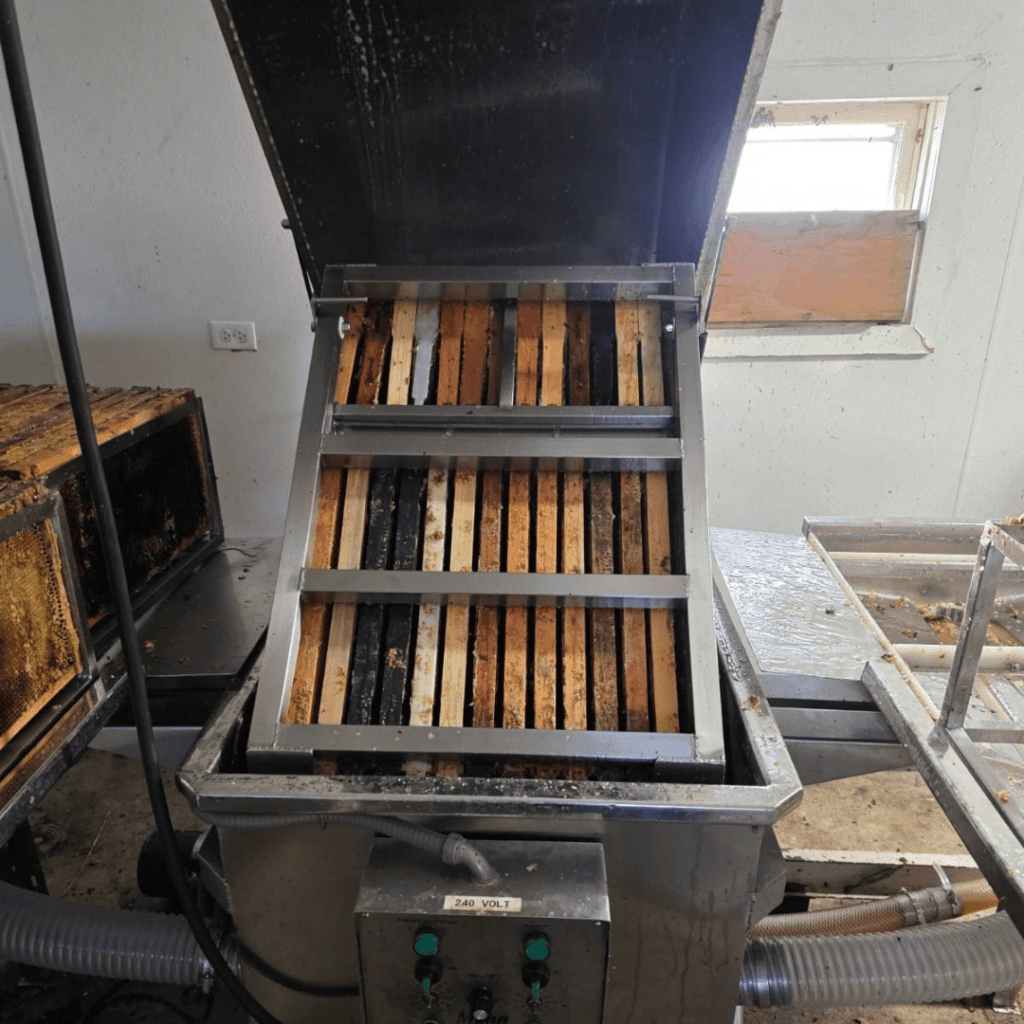
Honey houses are never pretty to look at but the process is very interesting!
The cappings come off and we put them into a spinner that spins the honey out of them and then the dry cappings are put into a wax melter which melt the cappings down into wax blocks, which of course we make into beautiful candles!

You can see from the hives that are stacked up the shallower boxes will hold about 20 pounds of honey and the deep boxes from 80 to 90 lbs of honey. So from some hives we might get only 20 lbs of honey but some others might yield up to 140 pounds. We typically average around 80 to 90 pounds per hive, which is much better than we could produce in Southern Oregon.
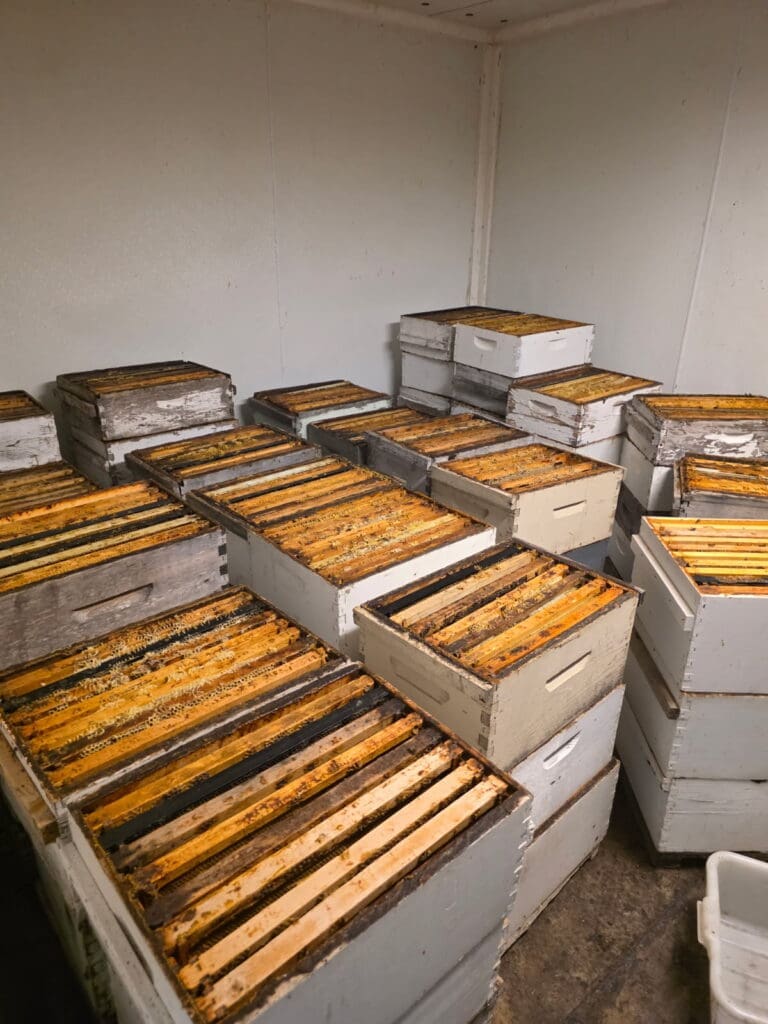
We will typically pull off anywhere from 40 to 80 honey supers a day. These boxes can weigh up to 100 pounds each, so it’s hard work. We have a warm room that will hold about 90 supers. The boxes need to be kept warm before they are extracted, because just like honey in jars, it will crystallize or “sugar up,” which as you can imagine is a huge pain during this process and must be avoided. The extracting room will hold about 40 supers; we put them there first for the day and night so what bees are in there can get out of the boxes then we’ll put them into the warm room and then the next day we extract those and we do a rotation.
At times we get a fair amount of bees in the honey house from the honey supers so we put a frame of brood in a small box near the window with a queen in its cage. Loose bees naturally gravitate to light and so in the evening they’ll go to the window where that small box is and after one or two days when there are plenty bees in it, we’ll put it out in the field and add a few more frames of brood to it so it’ll be big enough to get through the winter. So we can make a new hive out of all the orphans that just met in the honey house!
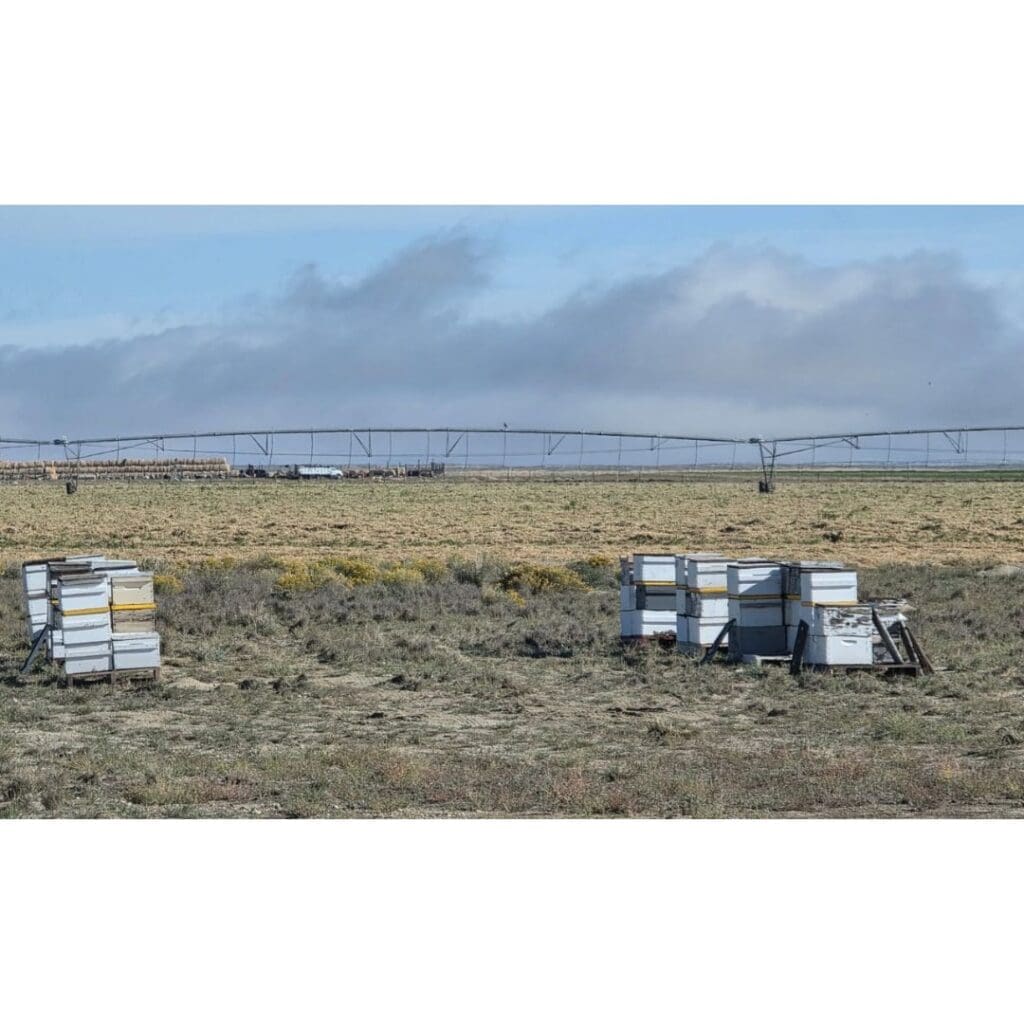
Farson is about 6800 foot level and one can see the Rockies in the distance about 40 miles away.
We bring the bees up to Wyoming the very end of June every year. Things just start to bloom by the 1st of July there so it’s springtime at that time in Wyoming. It is the second summer for the bees as they already experienced their first summer either in California or in Southern Oregon, depending on where the bees were before this trip.
In the high desert, first sweet Clover comes up wild and then there are also the alfalfa pivots, plus the wild brush so there is plenty for the bees to work. The bees will stay there till the end of October and then we will take them to Blackfoot Idaho and put them in a climate controlled building for the winter. There, they’re able to maintain in a state of dormancy and consume their honey stores at a lower temperature so they won’t eat it all up early and starve. Since winter temperatures have been so unpredictable the last few years, our survival rate by doing that is much better. We don’t lose near the hives by having them in the building for the winter out of the weather.
The Sweet Clover honey we make up there is a very light honey has a little bit of a cinnamon taste. Interestingly, honey from other areas do not have that unique flavor. We typically extract about 30 barrels of honey a year in Farson. Then it’s a long drive back home with my truck full of honey barrels of honey.

Most of the trip is enjoyable with beautiful scenery, large bluffs and river canyons to go through.

Many of you might be wondering why I take bees to Wyoming in the middle of summer. Well, once the blackberries are done blooming here in Southern Oregon it’s typically too dry to produce anything in the latter part of the summer, which means we must feed them. Unfortunately, there’s not near the honey flows as there used to be here. If the bees aren’t doing very well I typically lose many, even in the summer, and so by taking them to Wyoming it’s springtime all over and the honey flow is in abundance.
When we move the bees to Wyoming in June, it is a little difficult. It is hard on the bees to get them there, what with long days and the heat and the constant stress of being on the road. We try to drive at night mostly and then we water the bees during the daytime a few times. Of course, we look closely at the forecast and we pick our time so we’re not driving in the hot weather too much.
Thank you for coming along with me on my trip. I hope you enjoyed it!
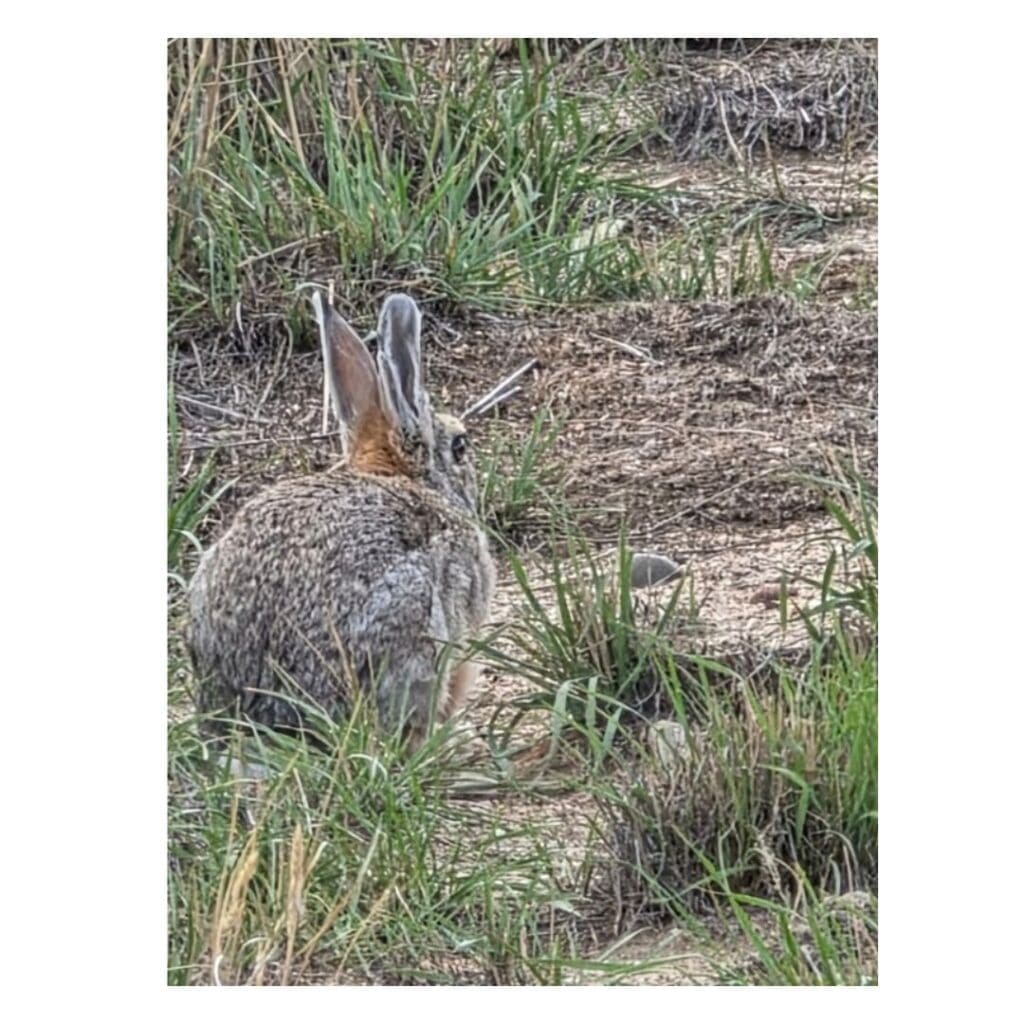
There’s quite a few other birds and animals there; sage grouse, cottontail rabbits, lots of other things.
Related Content


Our Story
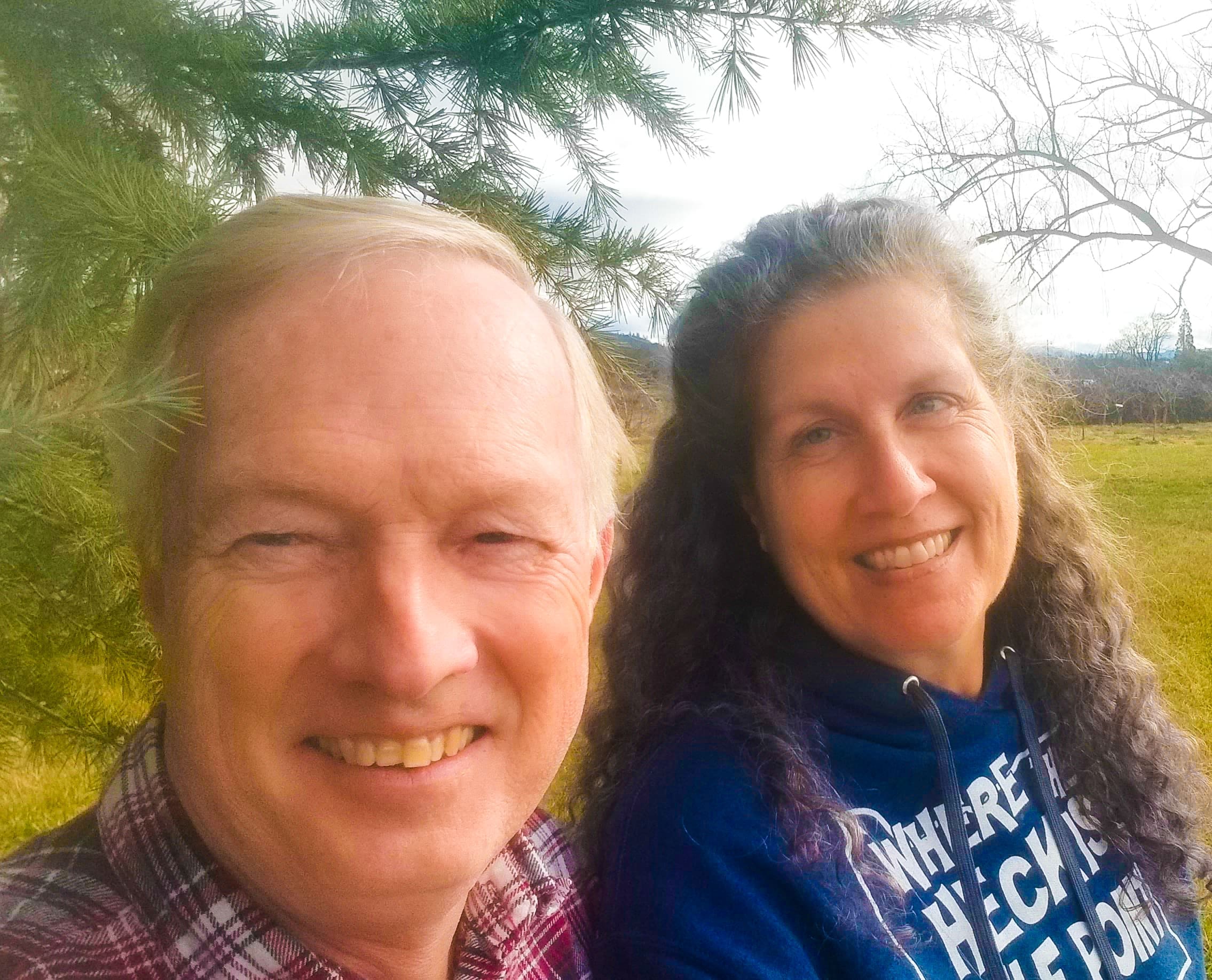
Wild Bee Honey Farm is a second-generation family business founded in 1966 in Southern Oregon. For more than 60 years, the Curtis family has raised bees, produced raw varietal honey, and created handcrafted beeswax candles with a focus on quality, tradition, and care.